The Canadian Solidarity Stack
The Canadian Solidarity Stack
To achieve digital autonomy, the co-operative sector must move from consuming AI to owning the intelligence infrastructure that powers it.
We need to cooperatively fund and build the maintainable Canadian-based infrastructure our organisations need.
A phased Approach to Sovereign AI
Our report outlines a phased roadmap toward the goal of co-operatively owned digital atonomy for our AI infrastructure.
- Beginning with immediately actionable alternatives to corporate AI tools (Phase 1),
- Progressing to enterprise-grade options through managed cloud services (Phase 2),
- And culminating in the full Canadian “Solidarity Stack” (Phase 3), a long-term, sustainable AI ecosystem built for and governed by Canadian organisations.
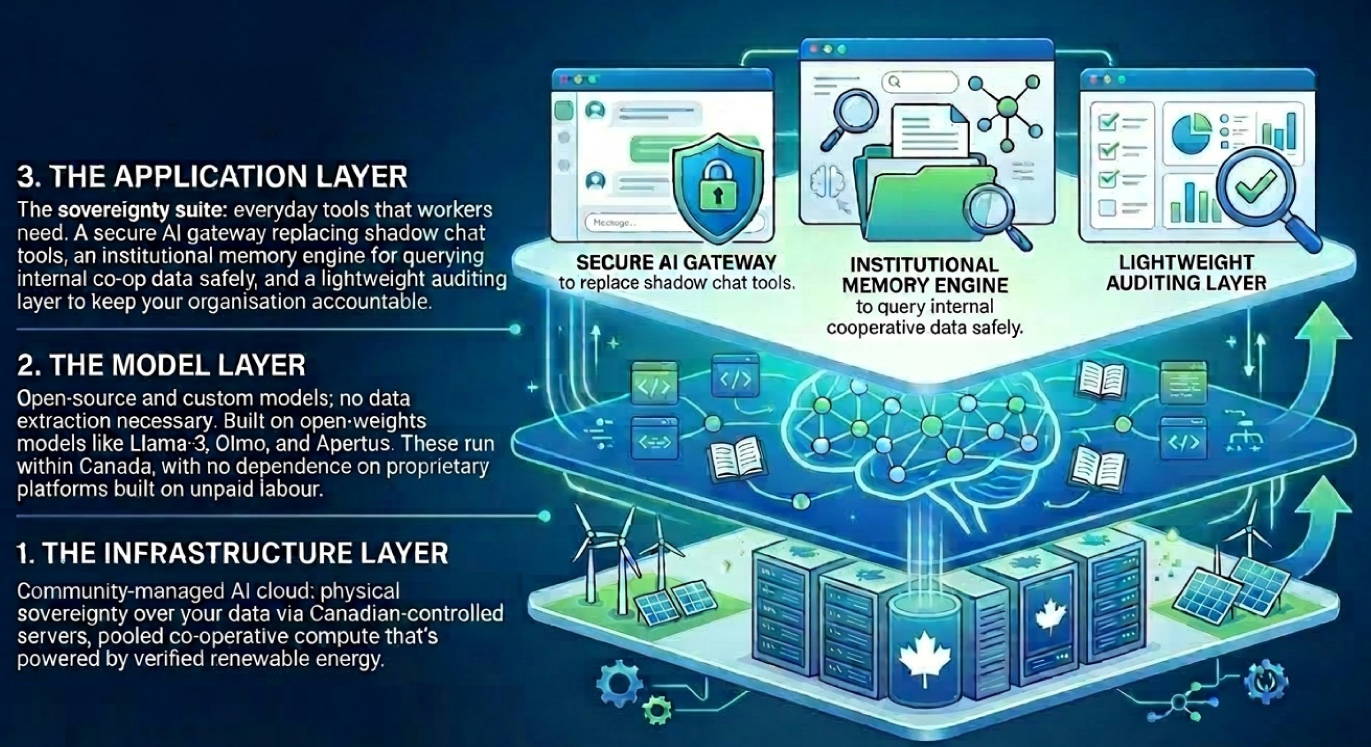
To reach this goal we need to own each layer of the AI stack, which can be categorised into three distinct, manageable pieces.
Phase 1:
Local First Resilience & Research
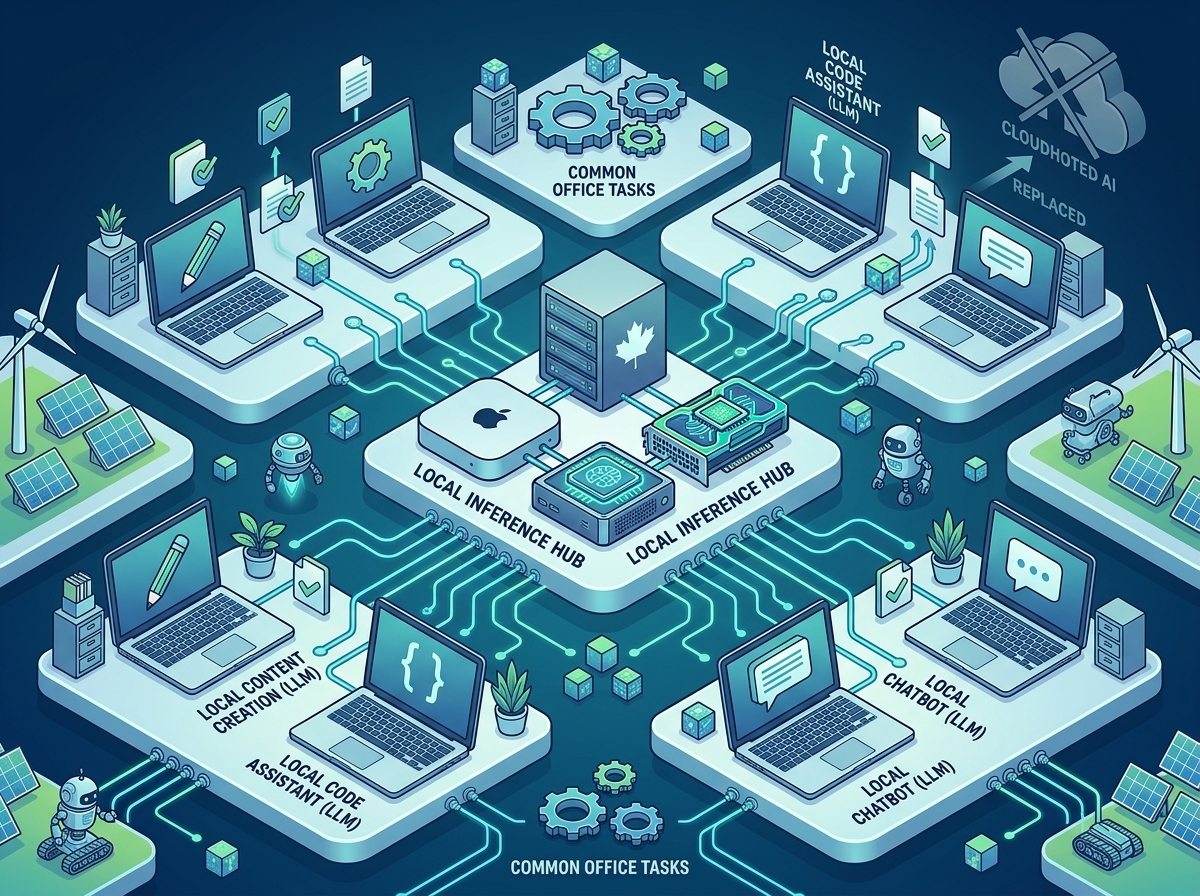
Move your inference needs off U.S. providers and host locally. Educate your staff and develop internal policies.
Organisations can begin the transition to a more sovereign stack by replacing cloud-hosted AI with local inference on consumer-grade laptops, or dedicated local servers (like a Mac Mini or a PC with a GPU) for common tasks. This means hosting robust open-source LLMs on local hardware networked within the organisation, and accessed with chat interfaces similar to ChatGPT or Claude, but lacking some of the more generalised functionality.
Phase 2:
Managed AI Hosting in Canada
Enterprise needs require enterprise infrastructure purchased from Canadian providers.
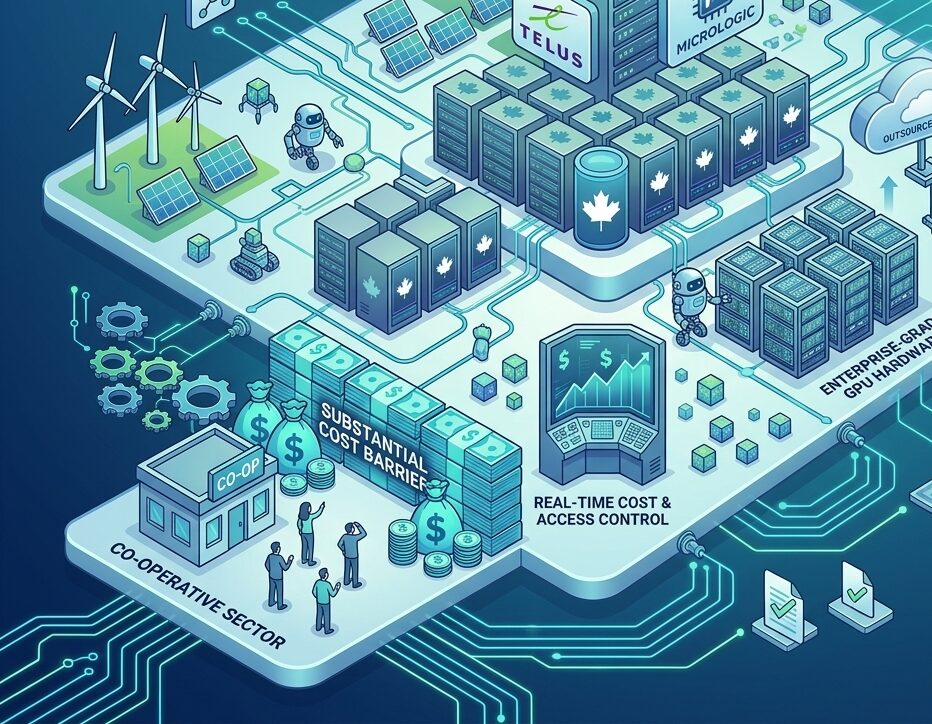
There are some Canadian-owned companies providing AI cloud services (Telus and Micrologic) which provide reliable options for developing AI infrastructure, renting enterprise-grade GPU hardware in the cloud. However, the costs are substantial, and without efficient parallelism and request batching, which is hard to implement and not especially cost effective, this approach is out of reach for many organisations.
Phase 3: The Canadian Solidarity Stack
What does a co-operatively funded, buildable and maintainable Canadian-based infrastructure look like?
The Infrastructure Layer (The Community-Managed AI Cloud)
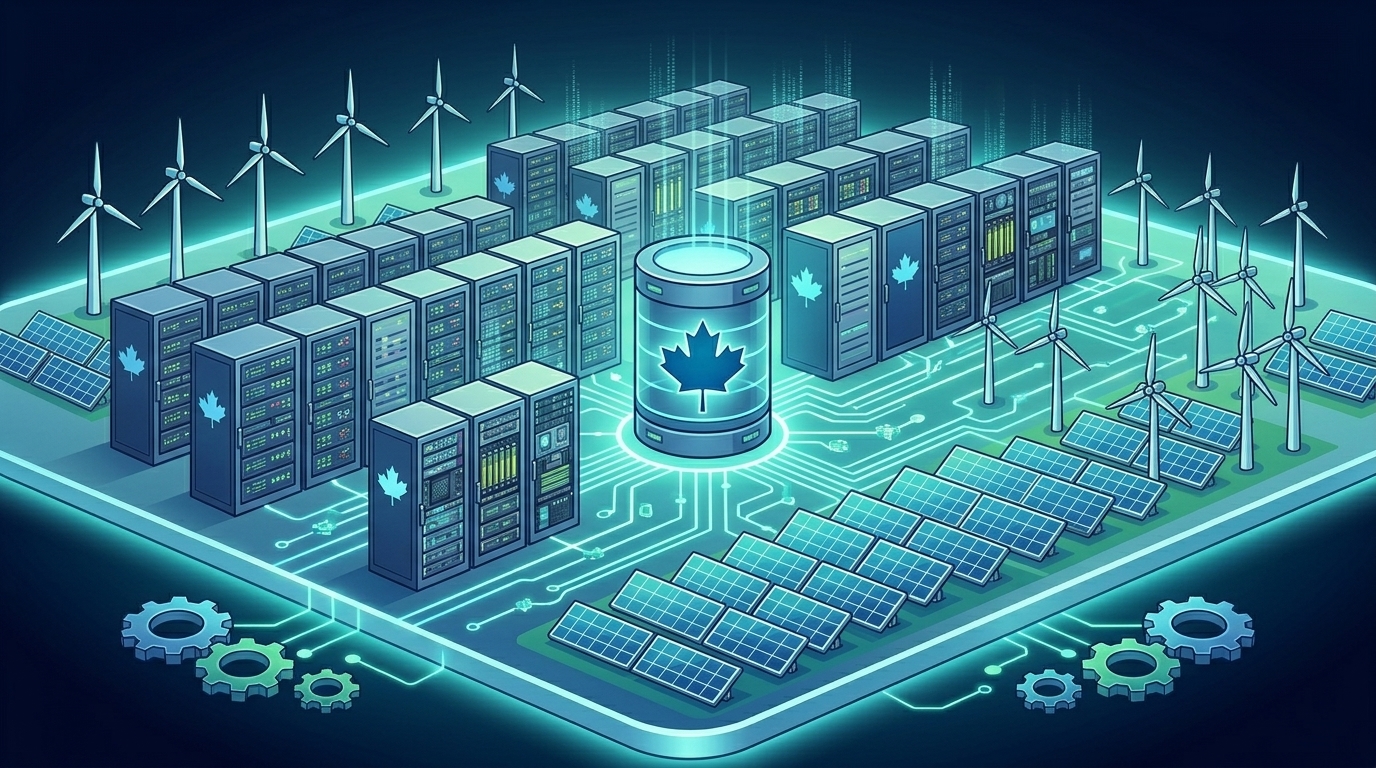
The foundational layer. True data security demands physical hosting on infrastructure owned by Canadian-controlled organisations. This layer involves pooling compute resources on Canadian servers, ideally powered by verified renewable energy, and centrally managed by a co-operative provider to ensure absolute data jurisdiction.

The Model Layer
(Open-Source & Custom Models)
The middle layer. Instead of relying on proprietary models built on unpaid labour extraction, this layer leverages open-weights and open-source models (such as Llama-3, Olmo, or Apertus). These models can be ethically audited, transparently customized, and run entirely within the Canadian context.
The Application Layer
(The Sovereignty Suite)
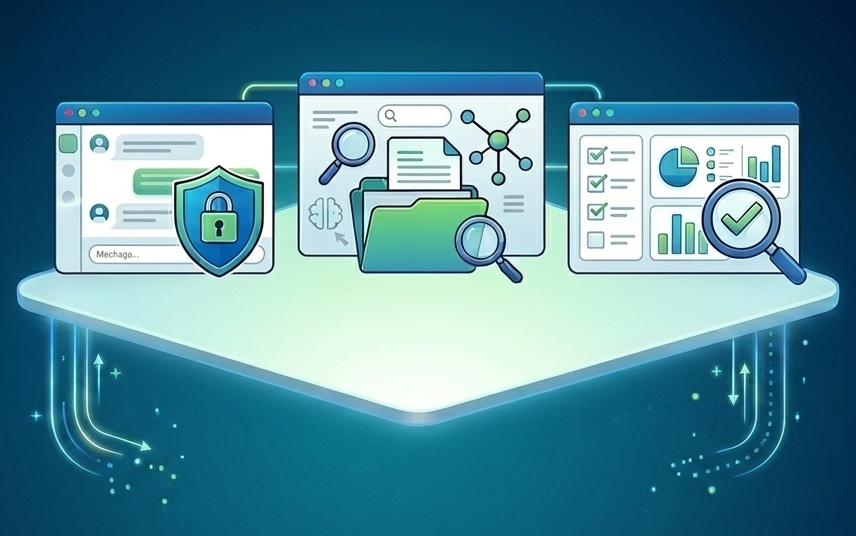
The top, user-facing layer. This suite provides the everyday tools workers need: a secure AI gateway to replace shadow chat tools, an institutional memory engine to query internal cooperative data safely, and a lightweight auditing layer for institutional accountability.
Putting it all Together
Putting it all Together